Concrete Polishing Questions
The questions we get most often. If yours isn't here, give us a call.
How long does concrete polishing take in Surrey?+
Most residential jobs — a garage, basement, or kitchen floor — take one to two days. Commercial floors are phased over multiple shifts. The exact timeline depends on the size of the slab and the finish level you choose.
How much does concrete polishing cost in Surrey, BC?+
Pricing depends on the size, condition, and finish level. Residential floors typically range from a few hundred to a few thousand dollars for a full polish. Commercial floors are priced per square foot. We provide written quotes with no obligation — call or fill out the form and we'll come out and measure.
Can you polish concrete floors in a condo or apartment?+
Yes. We use dust-free grinding equipment with HEPA-filtered vacuums that capture concrete particles at the source. This makes polishing practical in occupied buildings, strata complexes, and residential highrise units where traditional grinding would be prohibited.
What is the difference between polished concrete and epoxy flooring?+
Polished concrete is the slab itself — mechanically refined to a smooth, dense surface. Epoxy is a coating applied on top of the concrete. Polished floors look more natural and never peel. Epoxy coatings are thicker, can add colour flake for grip, and are great for garages and commercial kitchens where chemical resistance is the priority.
Will polished concrete be slippery when wet?+
A well-specified polished concrete floor with the right sealer is not significantly more slippery than tile. We recommend adding anti-slip aggregate to the sealer topcoat in wet areas like bathrooms, commercial kitchens, and exterior patios. We will discuss the right slip-resistance rating for your space during the quote.
Can you polish over existing concrete that has tiles or carpet glue on it?+
Yes. Grinding removes old adhesives, thin-set mortar, glue-down carpet, and most coatings. Some adhesives require multiple grinding passes with aggressive tooling, but there is almost no substrate we cannot prepare. We assess the condition of the slab before quoting so there are no surprises.
How do you maintain polished concrete floors?+
Daily dust mopping removes grit that would otherwise scratch the surface over time. Damp mopping with a pH-neutral cleaner handles spills. Avoid vinegar, bleach, and citrus cleaners — they etch the sealer. High-traffic commercial floors benefit from a maintenance burnish every 6-12 months to restore sheen. Residential floors rarely need more than a pH-neutral clean.
Do you work in occupied spaces or do I have to vacate?+
We use dust-free equipment that makes it practical to work in occupied or partially occupied spaces. For residential work most clients simply stay out of the room being polished. For commercial work we schedule phases around your operating hours including nights and weekends.
What level of gloss can I choose for my polished concrete floor?+
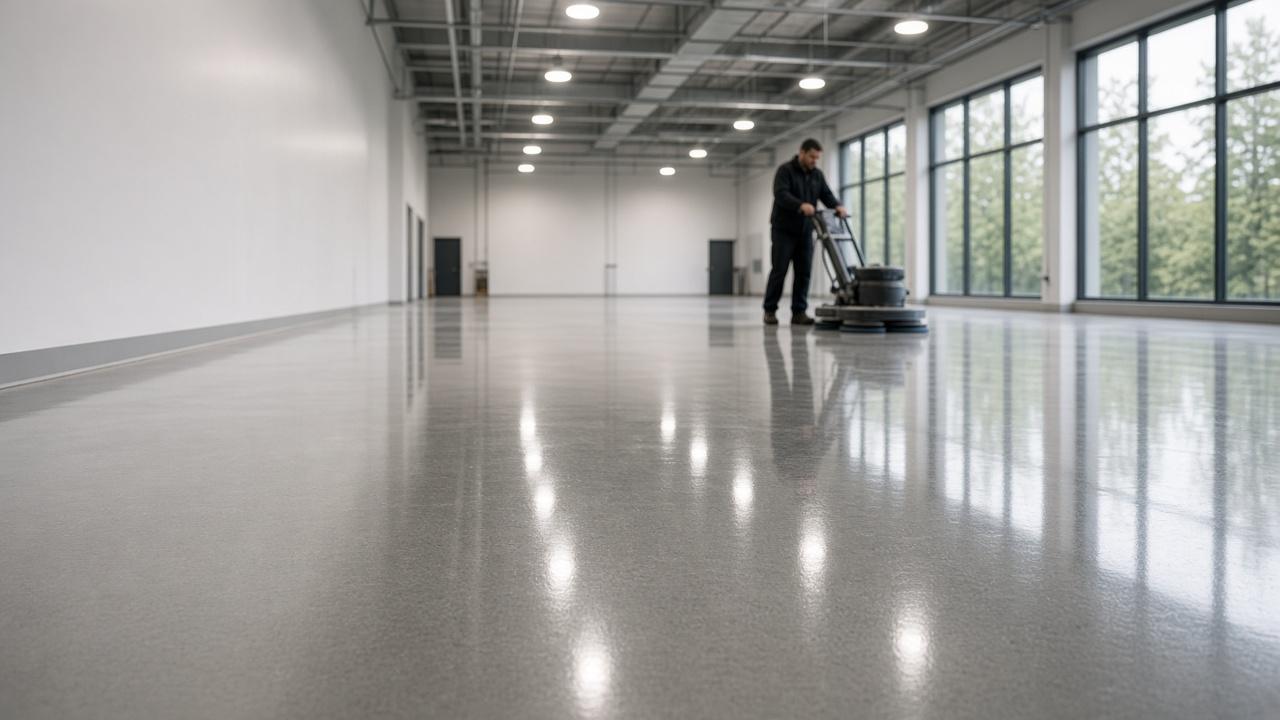
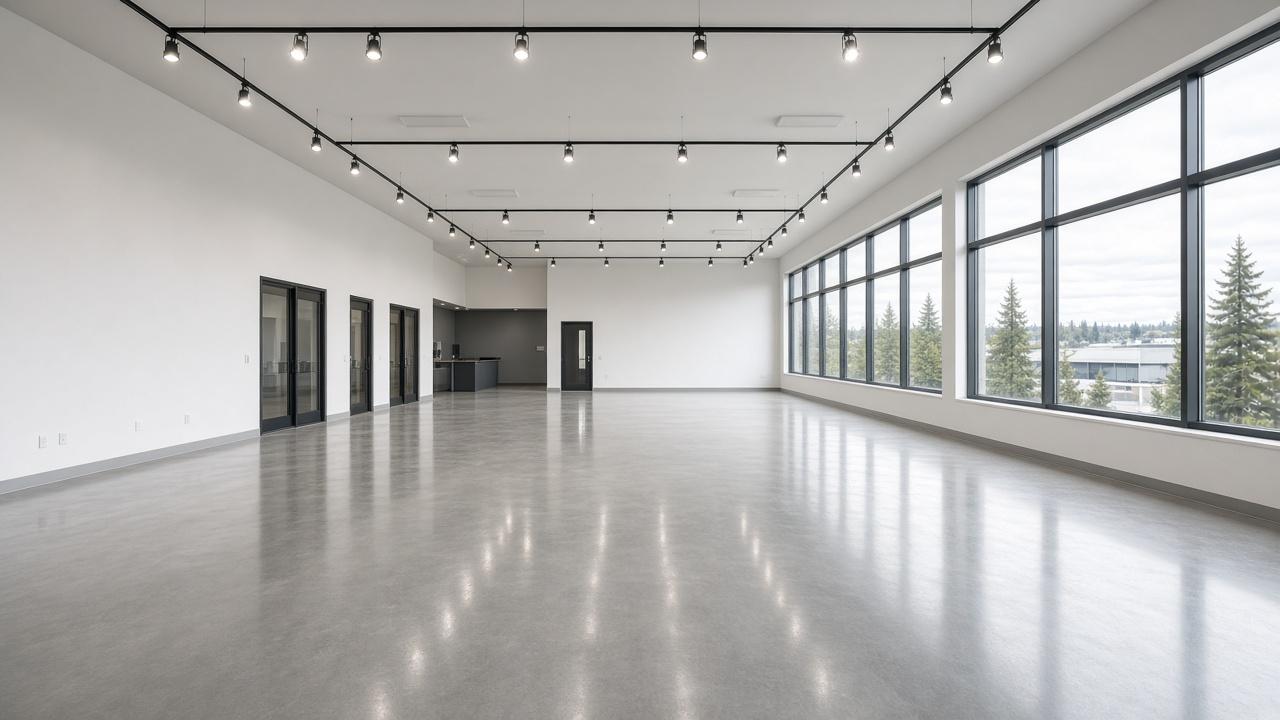
We offer four finish levels: matte (400 grit), satin (800 grit), semi-gloss (1,500 grit), and high-gloss mirror (3,000 grit). Matte and satin are popular for residential and commercial spaces that want a natural look. High-gloss is popular in retail and showroom settings where the reflective depth is part of the design intent.
Do you polish concrete floors in South Surrey and White Rock?+
Yes. South Surrey and White Rock are among our most active service areas. The luxury renovation market in Grandview Heights, Morgan Crossing, and the White Rock beachfront regularly calls for high-gloss polished concrete as a flooring upgrade. We can usually schedule within two weeks.