Two Good Options — But They Are Not Interchangeable
Surrey homeowners upgrading their garage floors usually land on one of two options: polished concrete or epoxy coating. Both are massive upgrades over a bare or painted slab. Both are professionally installed, long-lasting, and easy to maintain. But they are fundamentally different systems that suit different priorities, and choosing the wrong one for your situation is a frustrating and expensive mistake.
Here is a straight comparison.
Polished Concrete: What It Is and Where It Wins
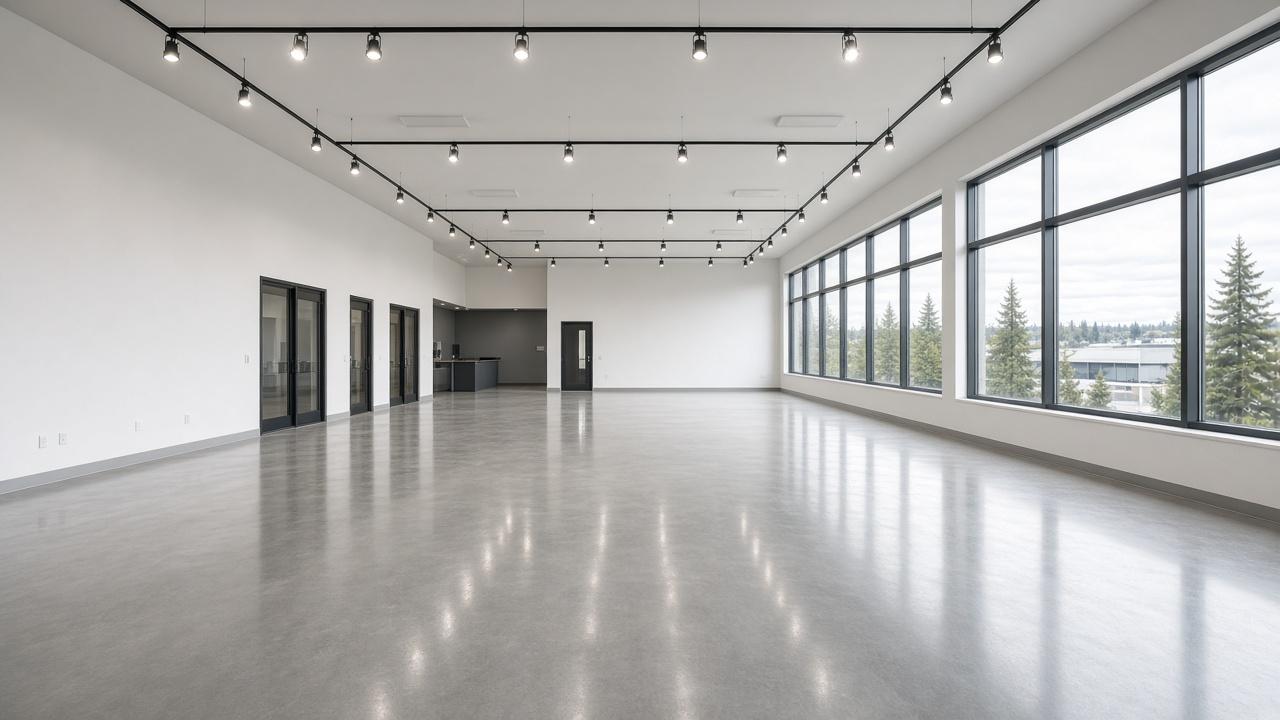
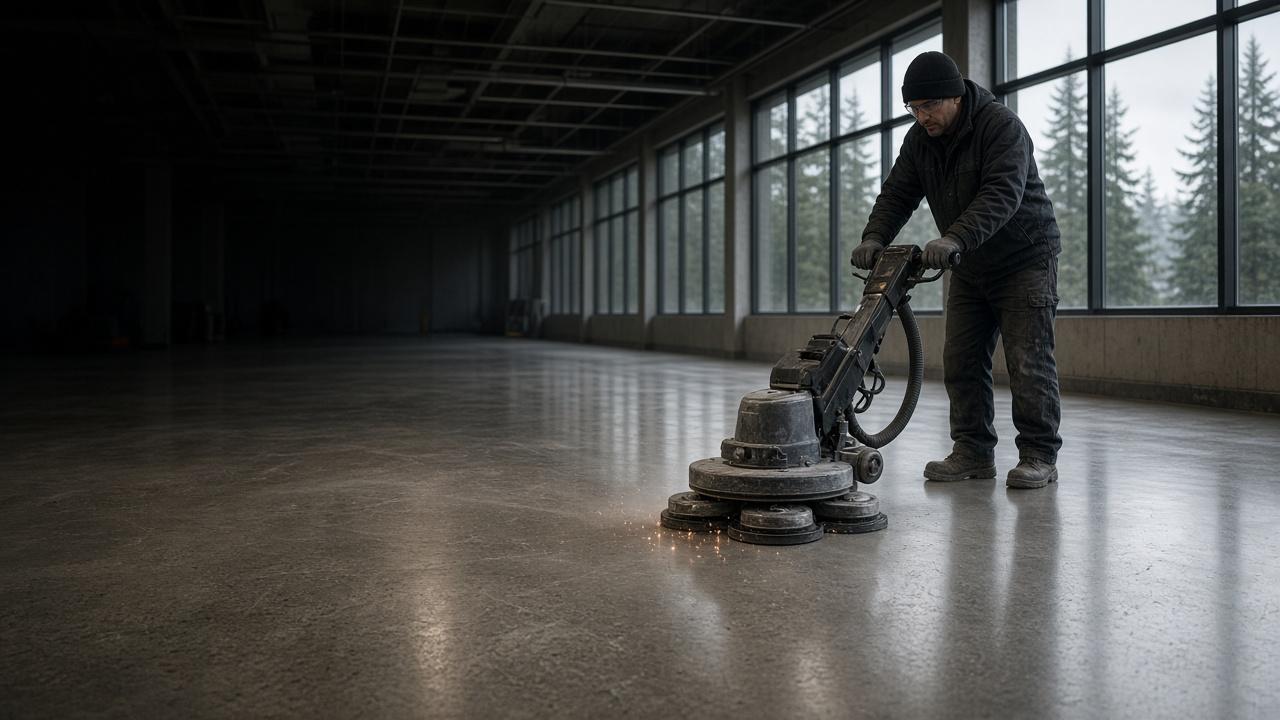
Polished concrete is the slab itself, mechanically refined with diamond tooling to a smooth, dense, reflective surface. Nothing is added on top except a penetrating densifier and a guard sealer. The floor IS the concrete.
**Where polished concrete wins:**
**Permanence.** There is nothing to peel, chip, or delaminate. You are not relying on the adhesion of a coating to a substrate. The surface is the substrate. A properly polished floor in a Surrey home will still look great in 30 years.
**Low maintenance.** No waxing, no stripping, no periodic recoating. A damp mop with pH-neutral cleaner is all it needs. The surface does not degrade from UV, cleaning chemicals, or normal abrasion the way topcoats eventually do.
**Appearance.** Polished concrete has a depth and texture that epoxy cannot replicate. In well-lit garages with light walls, a polished floor looks like high-end stone. In upscale Surrey homes — particularly in South Surrey and White Rock — the polished look reads as premium and intentional.
**No film thickness.** Because nothing is added to the floor surface, there is no step-up at doorways and no transition strip needed where the garage floor meets the house interior. This matters in townhouses and attached garages where interior transitions are visible from the main living area.
**Where polished concrete is less ideal:**
**Chemical resistance.** Polished concrete with a guard sealer resists minor oil and fluid spills, but it is not chemically resistant in the way a 100% solids epoxy is. If your garage has a car lift, active vehicle maintenance, or regular chemical storage, epoxy's superior chemical resistance is the better spec.
**Oil stain history.** If your slab has 15 years of oil soaked deep into the concrete, grinding can remove most of it — but very deep contamination may not be fully eliminated. Epoxy can cover residual staining that the grind cannot fully remove.
Epoxy Coating: What It Is and Where It Wins
Epoxy is a two-part reactive resin system applied as a coating over the prepared concrete substrate. The standard system used by professionals is 100% solids epoxy — not the diluted water-based versions sold in home stores. A full system includes a primer, a pigmented base coat, a decorative flake layer, and a polyaspartic or polyurethane topcoat.
**Where epoxy wins:**
**Chemical resistance.** A 100% solids epoxy system resists automotive fluids, cleaning solvents, gasoline, and a wide range of chemicals that would stain or etch polished concrete. For working garages, this is a significant advantage.
**Colour and customisation.** Epoxy offers solid colour, metallic, or multi-flake options in dozens of colour combinations. The decorative colour flake system — the most common choice for Surrey garages — creates a speckled, multi-tone look that hides minor scuffs and dirt between cleans.
**Bridging contamination.** If the slab has old staining that grinding alone cannot fully remove, a properly installed epoxy base coat and topcoat can visually cover it. The key is the preparation — the floor must still be correctly ground and any active contamination treated or the coating will not bond.
**Anti-slip texture.** The colour flake layer and anti-slip aggregate added to the topcoat create inherent texture that is more forgiving than a high-gloss polished surface in wet conditions. Good choice for garages used year-round with wet vehicles.
**Where epoxy is less ideal:**
**Longevity of the coating vs the slab.** Epoxy topcoats do degrade over time, especially under UV exposure. A garage with a large south-facing door will see epoxy yellowing within a few years unless a UV-stable polyaspartic topcoat is specified. Even with the right topcoat, the floor may need a topcoat refresh in 10-15 years.
**Peeling risk.** This is almost always a preparation failure — too little surface profile, moisture in the slab, or a water-based epoxy that did not bond. But it is the most common complaint homeowners have about previous epoxy jobs. Proper preparation by a professional eliminates this risk.
The Honest Summary
**Choose polished concrete if:** you want the most permanent, natural-looking, maintenance-free result. Great for attached garages in upscale South Surrey homes, condo strata garages, and anywhere the floor is visible from a living area.
**Choose epoxy if:** you use the garage for active vehicle work, need maximum chemical resistance, want a specific colour scheme, or are dealing with a slab that has significant oil contamination or aesthetic issues polishing alone cannot fix.
**Not sure?** Call us. We will come out, look at your slab, understand how you use the space, and give you a straight recommendation — including if the right answer is something in between (like a polished concrete floor with an epoxy band around the perimeter where chemicals might spill).
Related from Surrey Concrete Polishing Co.